


How to Start a Robotics Lab in School or College: Building the Future, Not Just Buying Gear
Intro
Most school robotics labs are depressing places. 😔🏚️
They start with a giant ribbon-cutting ceremony and a massive grant check. Six months later, they are expensive storage closets filled with half-broken robots, tangled wires, and outdated manuals that nobody reads.
In 2026, launching a robotics program isn't about buying 30 identical kits and hoping for the best. That is a recipe for expensive failure. A true robotics lab is an ecosystem. It’s a dynamic space where mechanical engineering, computer science, AI, and creativity collide.
It shouldn't just be a room for the "nerds" after school; it needs to be the heartbeat of campus innovation.
Stop buying hardware before you have a strategy. Here are the 5 foundational pillars to building a world-class robotics lab in 2026 that will actually produce engineers. 🏗️🦾
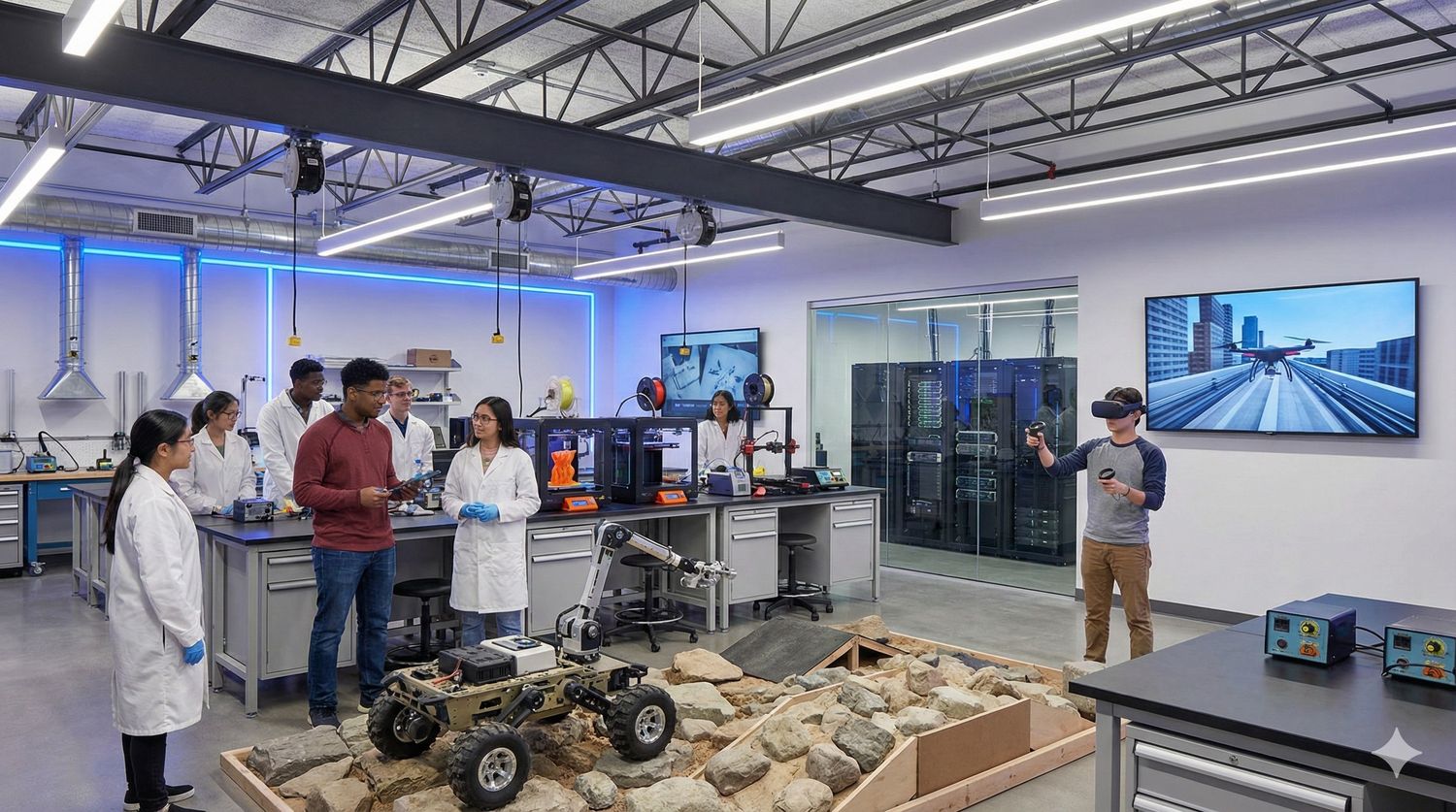
🏫 Pillar 1: The Flexible "Makerspace" Environment
The Goal: Designing the Physical Space
Why it wins: Traditional classroom rows kill collaboration. Robotics is messy, loud, and requires movement. You need space to test, fail, and iterate.
The 2026 Edge: Move beyond just tables and soldering stations. The modern lab integrates "Simulation Zones." Before students touch expensive hardware, they should be testing their code in high-fidelity virtual environments using VR headsets or powerful simulation software (like Gazebo or NVIDIA Isaac Sim).
What you gain: Lower hardware breakage costs and a safe environment for radical experimentation. 👓
🪜 Pillar 2: The Tiered Hardware Ladder
The Goal: Smart Procurement Strategy
Why it wins: Dumping advanced equipment on beginners leads to frustration; giving toys to advanced students leads to boredom. One size does not fit all.
The 2026 Edge: Avoid proprietary ecosystems that lock you in. Focus on hardware that supports industry standards like ROS 2 (Robot Operating System).
-
Tier 1 (Entry): Modular kits (LEGO Spike, VEX IQ) for logic and structure.
-
Tier 2 (Intermediate): Arduino/Raspberry Pi IoT setups for electronics and Python coding.
-
Tier 3 (Advanced): AI-enabled platforms (NVIDIA Jetson based bots, quadruped dogs) for computer vision and machine learning.
What you gain: A clear growth path for students from freshman to senior year. 📈
📘 Pillar 3: The "Living" Curriculum Integration
The Goal: Moving Beyond the After-School Club
Why it wins: If robotics is only an extracurricular activity, you exclude 80% of your student population. It needs to be integrated into the school day.
The 2026 Edge: Project-Based Learning (PBL) linked to real-world challenges. Instead of following a manual to build a generic bot, students are tasked with solving local problems—e.g., "Design a drone to monitor the school's solar panels" or "Build an agricultural bot for the community garden."
What you gain: inclusive participation and highly engaged students solving actual problems. 🌍
💰 Pillar 4: Sustainable Funding & Corporate Partnerships
The Goal: Keeping the Lights On
Why it wins: The initial grant will run out. Schools often forget to budget for replacement parts, software licenses, and competition registration fees.
The 2026 Edge: Move from begging for donations to building talent pipelines. Local tech companies and manufacturers are desperate for skilled labor in 2026. Partner with them to sponsor specific "benches" in your lab. In exchange, they get first look at your graduating talent and propose capstone projects.
What you gain: A renewable revenue stream and direct career pathways for students. 🤝
🧠 Pillar 5: Cultivating the "Open-Source Culture"
The Goal: Defining the Vibe
Why it wins: A lab where students hide their code to get a better grade than their peers is a failed lab. Engineering is about collaboration.
The 2026 Edge: Institutionalize "Open-Source." Make GitHub GitHub portfolios mandatory. Students should document their failures and share their code repositories publicly. The lab should celebrate the spectacular crash just as much as the successful mission.
What you gain: A resilient community of learners who know how to collaborate globally. 🌐
❤️ Final Words
A room full of 3D printers and robot arms doesn't make engineers. A culture of curiosity does.
Don't obsess over having the newest gadget. Obsess over the access you provide. ✔ Start with the space you have. ✔ Buy less gear than you think you need, but buy higher quality. ✔ Train your teachers before you train the students. ✔ Let the students break things.
If the lab is always quiet and tidy, you are doing it wrong.
💬 “We cannot solve our problems with the same thinking we used when we created them.” — Albert Einstein
Your school's future innovation hub begins with a single strategic plan. 📄
🚀 Brainhap Edge
At Brainhap, we don't just sell you equipment and disappear. We are architects of educational ecosystems.
We help institutions: ✔ Design the floorplan of your lab for maximum flow, safety, and collaboration 📐 ✔ Negotiate with vendors to create the perfect "Tiered Hardware Ladder" for your budget 💸 ✔ Train your existing faculty to become confident robotics mentors (no engineering degree required) 👨🏫 ✔ Connect your lab with our network of industry partners for sponsorships and internships 🔗 ✔ Develop custom challenges that align with your state's curriculum standards 🏆
Whether you are converting an old library or building a new wing — Brainhap ensures your investment lasts longer than the ribbon-cutting ceremony.
Your journey starts with a vision. We provide the blueprint. ✨
Unlock Your Full Potential with BrainHap
Don't let uncertainty hold you back. Discover your strengths and build a future-proof career with our AI-driven assessments.
Start Your Free Assessment