


How Robotics Builds Problem-Solving & Leadership Skills in Students
Intro Most parents look at a student building a robot and see a "future engineer" or a "techie." 🤖 But the surprising truth? Robotics isn't just about wires, motors, and code. It is a secret training ground for the CEOs, Leaders, and Changemakers of tomorrow. 🌍 When a student builds a robot, they aren't just assembling a machine. They are assembling their character. Today, the skills companies want most—Leadership, Resilience, and Critical Thinking—aren't learned in a textbook. They are learned when a robot fails to move, and a student decides to fix it instead of giving up. Let’s walk through how Robotics builds the leaders of 2026. 🚀
🧩 Step 1: Making Friends with Failure — The First Step to Success In a normal classroom, if you get an answer wrong, you get a red mark. ❌ In Robotics, if you get it wrong, the robot falls over. The Lesson: Failure isn't the end. It’s data.
-
The Student thinks: "It didn't work. Why? Let me tweak the code. Let me change the gear."
-
The Skill: Resilience. A leader isn't someone who never fails. A leader is someone who never quits. 💪
🕵️♂️ Step 2: Critical Thinking — Debugging Real Life "My robot isn't turning left." A beginner guesses. A problem-solver investigates. The process:
-
Is it a mechanical issue? (Check the wheels). 🔧
-
Is it an electrical issue? (Check the wires). ⚡
-
Is it a logic issue? (Check the code). 💻 The Skill: Analytical Thinking. Robotics teaches students to break big problems into small, solvable pieces. This is exactly how CEOs solve business crises. 📉
🤝 Step 3: Collaboration — No One Builds a Rocket Alone You can write an essay alone. You cannot build a complex competition robot alone. The Team Dynamic:
-
One student is the Builder (Hardware).
-
One student is the Coder (Software).
-
One student is the Strategist (Driver). The Skill: Teamwork & Conflict Resolution. They learn to say, "Your idea is better than mine," or "Let's combine our ideas." Real leadership is knowing how to work with people who have different skills than you. 👥
🎨 Step 4: Creativity Under Constraints — The "MacGyver" Spirit In the real world, you never have unlimited budget or time. In Robotics competitions, you have limited parts and a deadline. ⏳ The Challenge: "We ran out of long beams. How do we still make the arm reach?" The Solution: "Let's combine two short beams with a connector!" The Skill: Resourcefulness. Robotics turns "We can't do this" into "How can we do this with what we have?" 💡
🗣️ Step 5: Communication — Selling Your Idea It doesn't matter if you built the best robot if you can't explain how it works. At competitions, judges ask: "Explain your logic." The Student must:
-
Speak clearly. 🎤
-
Simplify technical jargon.
-
Demonstrate confidence. The Skill: Public Speaking & Persuasion. The ability to explain complex ideas simply is the #1 trait of great leaders. 📢
⚖️ Step 6: Decision Making Under Pressure — The Strategy The match starts. The robot gets stuck. The clock is ticking. ⏱️ Do you give up? Or do you try a risky maneuver to free it? The Skill: Strategic Risk-Taking. Students learn to make split-second decisions. They learn to stay calm when things go wrong. Panic creates problems. Leadership creates solutions. 🧠
🚀 Step 7: Empathy — Building for Others Robotics isn't just about fighting bots. It's about helping humans. When students build a "Prosthetic Hand" or an "Automated Wheelchair," they stop thinking about motors and start thinking about people. The Skill: Empathy & Design Thinking. Great leaders don't just build cool things. They build things that help people. ❤️
🔮 The Future: Leaders Who Understand Tech In 2030, you won't be able to lead a company if you don't understand technology. The future belongs to the "Tech-Savvy Leader." They are:
-
Human-centric (Leadership).
-
Tech-fluent (Robotics).
-
Problem-obsessed (Innovation). You don't need to be an engineer forever. But thinking like one will make you a better leader in any career. 👔
❤️ Final Words You don't need to want a career in NASA to do Robotics. You just need to want to be:
-
✔ A better thinker.
-
✔ A better teammate.
-
✔ A more confident person. The robot is just the tool. The student is the project. 💬 “We are not using kids to build robots. We are using robots to build kids.” — Dean Kamen Your leadership journey begins today — with a single LEGO brick. 🧱
🚀 Brainhap Edge At Brainhap, we focus on the skills, not just the screws. We help learners:
-
✔ Tackle open-ended challenges that require logic 🧩
-
✔ Work in teams to build massive projects 🤝
-
✔ Present their inventions to peers and parents 🎙️
-
✔ Learn to handle failure with a smile and a "Retry" 🔄
-
✔ Develop the confidence to lead a project from scratch 🏆
-
✔ Become the problem-solvers the world is waiting for 🌍 Whether you are shy or outgoing, a math-lover or an artist — Brainhap gives you the platform to discover the leader within you. Your journey starts with curiosity. We guide you through the rest. ✨
Cover Image Generation
Here is the prompt for the cover image:
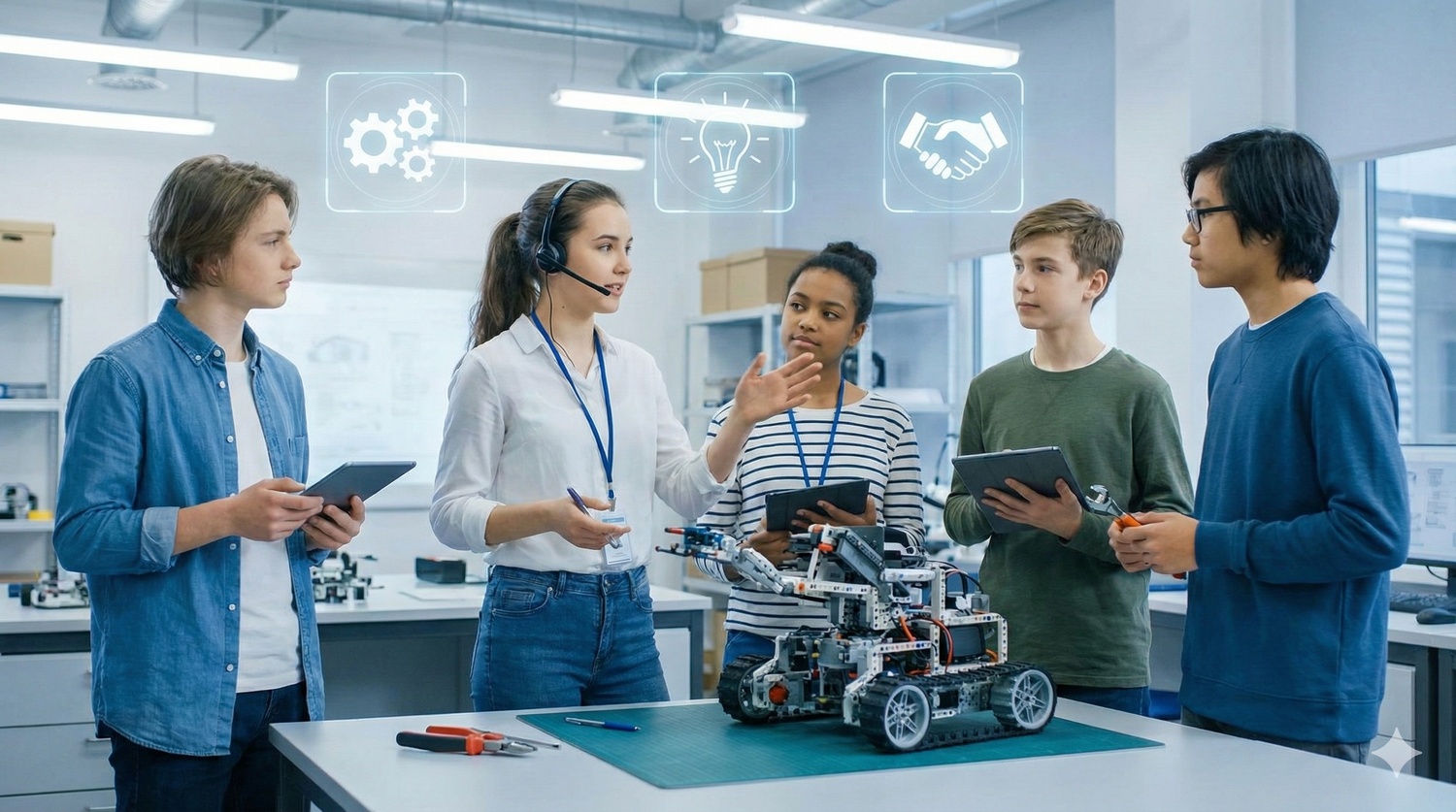
Prompt: "A group of diverse, confident students in a bright, futuristic robotics lab. One student is pointing at a robot on a table, explaining a strategy to the others who are listening intently. They look like young leaders. Floating holographic icons of 'lightbulb' (ideas), 'gear' (logic), and 'handshake' (teamwork) around them. Cinematic lighting, 3D Pixar-style animation, inspiring atmosphere."
(I will now generate this image for you). Here is the blog content for "How Robotics Builds Problem-Solving & Leadership Skills in Students," strictly following the format, tone, and structure of your sample text.
Blog Title: How Robotics Builds Problem-Solving & Leadership Skills in Students
Intro Most parents look at a student building a robot and see a "future engineer" or a "techie." 🤖 But the surprising truth? Robotics isn't just about wires, motors, and code. It is a secret training ground for the CEOs, Leaders, and Changemakers of tomorrow. When a student builds a robot, they aren't just assembling a machine. They are assembling their character. Today, the skills companies want most—Leadership, Resilience, and Critical Thinking—aren't learned in a textbook. They are learned when a robot fails to move, and a student decides to fix it instead of giving up. Let’s walk through how Robotics builds the leaders of 2026. 🚀
🧩 Step 1: Making Friends with Failure — The First Step to Success In a normal classroom, if you get an answer wrong, you get a red mark. ❌ In Robotics, if you get it wrong, the robot falls over. The Lesson: Failure isn't the end. It’s data.
-
The Student thinks: "It didn't work. Why? Let me tweak the code. Let me change the gear."
-
The Skill: Resilience. Students learn through "hit and trial," understanding that failure is just part of the process. A leader isn't someone who never fails. A leader is someone who never quits. 💪
🕵️♂️ Step 2: Critical Thinking — Debugging Real Life "My robot isn't turning left." A beginner guesses. A problem-solver investigates. The process:
-
Is it a mechanical issue? (Check the wheels). 🔧
-
Is it an electrical issue? (Check the wires). ⚡
-
Is it a logic issue? (Check the code). 💻 The Skill: Analytical Thinking. Robotics forces students to break down big problems into small, solvable pieces to diagnose issues. This is exactly how CEOs solve business crises. 📉
🤝 Step 3: Collaboration — No One Builds a Rocket Alone You can write an essay alone. You cannot build a complex competition robot alone. The Team Dynamic:
-
One student is the Builder (Hardware).
-
One student is the Coder (Software).
-
One student is the Strategist (Driver). The Skill: Teamwork & Conflict Resolution. They learn to divide work and support each other, often turning shy students into confident team leaders. Real leadership is knowing how to work with people who have different skills than you. 👥
🎨 Step 4: Creativity Under Constraints — The "MacGyver" Spirit In the real world, you never have an unlimited budget or time. In Robotics competitions, you have limited parts and a deadline. ⏳ The Challenge: "We ran out of long beams. How do we still make the arm reach?" The Solution: "Let's combine two short beams with a connector!" The Skill: Resourcefulness. Students are constantly challenged to analyze their resources and come up with their own unique designs. Robotics turns "We can't do this" into "How can we do this with what we have?" 💡
🗣️ Step 5: Communication — Selling Your Idea It doesn't matter if you built the best robot if you can't explain how it works. At competitions, judges ask: "Explain your logic." The Student must:
-
Speak clearly. 🎤
-
Simplify technical jargon.
-
Demonstrate confidence. The Skill: Public Speaking & Persuasion. Students learn to articulate their ideas clearly and listen to others, which is vital for professional communication. The ability to explain complex ideas simply is the #1 trait of great leaders. 📢
⚖️ Step 6: Decision Making Under Pressure — The Strategy The match starts. The robot gets stuck. The clock is ticking. ⏱️ Do you give up? Or do you try a risky maneuver to free it? The Skill: Strategic Risk-Taking. Students learn to assess different variables and make effective decisions in real-time. Panic creates problems. Leadership creates solutions. 🧠
🚀 Step 7: Empathy — Building for Others Robotics isn't just about fighting bots. It's about helping humans. When students build a "Prosthetic Hand" or an "Automated Wheelchair," they stop thinking about motors and start thinking about people. The Skill: Empathy & Design Thinking. They learn to identify problems in everyday life that robots can fix, fostering a mindset of service and innovation. Great leaders don't just build cool things. They build things that help people. ❤️
🔮 The Future: Leaders Who Understand Tech In 2030, you won't be able to lead a company if you don't understand technology. The future belongs to the "Tech-Savvy Leader." They are:
-
Human-centric (Leadership).
-
Tech-fluent (Robotics).
-
Problem-obsessed (Innovation). You don't need to be an engineer forever. But thinking like one will make you a better leader in any career. 👔
❤️ Final Words You don't need to want a career in NASA to do Robotics. You just need to want to be:
-
✔ A better thinker.
-
✔ A better teammate.
-
✔ A more confident person. The robot is just the tool. The student is the project. 💬 “We are not using kids to build robots. We are using robots to build kids.” — Dean Kamen Your leadership journey begins today — with a single LEGO brick. 🧱
🚀 Brainhap Edge At Brainhap, we focus on the skills, not just the screws. We help learners:
-
✔ Tackle open-ended challenges that require logic 🧩
-
✔ Work in teams to build massive projects 🤝
-
✔ Present their inventions to peers and parents 🎙️
-
✔ Learn to handle failure with a smile and a "Retry" 🔄
-
✔ Develop the confidence to lead a project from scratch 🏆
-
✔ Become the problem-solvers the world is waiting for 🌍 Whether you are shy or outgoing, a math-lover or an artist — Brainhap gives you the platform to discover the leader within you. Your journey starts with curiosity. We guide you through the rest. ✨
Unlock Your Full Potential with BrainHap
Don't let uncertainty hold you back. Discover your strengths and build a future-proof career with our AI-driven assessments.
Start Your Free Assessment